
Your California Nonprofit Tax Exemption Application Guide
Unlock vital tax-exempt status for your California nonprofit with our expert-led, step-by-step application walkthrough.
Start Your ApplicationKey Takeaways
- ✓ California nonprofits require both federal (IRS) and state (FTB) tax exemptions.
- ✓ The state application (Form 3500 or 3500A) typically follows federal 501(c)(3) approval.
- ✓ Exemptions cover income tax, and potentially property and sales tax.
- ✓ Maintaining compliance involves annual filings with both state and federal agencies.
How It Works
Before applying for state exemption, your nonprofit must secure federal tax-exempt status from the IRS. This is the foundational step for all subsequent state-level exemptions.
Once federal approval is granted, prepare and submit the appropriate California Franchise Tax Board form. Form 3500 is for organizations without federal approval, while 3500A is for those with it.
Beyond income tax, consider applying for property tax exemption (via the State Board of Equalization) and sales tax exemption (though generally rare for nonprofits in CA).
Tax-exempt status isn't permanent without ongoing effort. Annually file required forms with the IRS, FTB, and the California Attorney General's Registry of Charitable Trusts to retain your status.
Understanding the California Nonprofit Tax Exemption Landscape
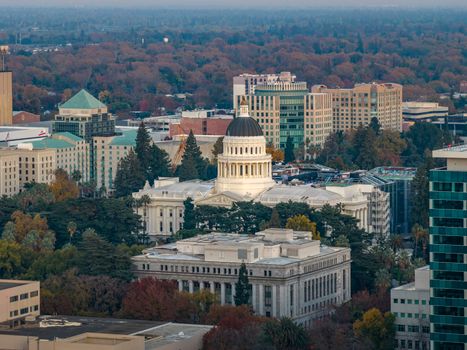 Photo: Stephen Leonardi / Pexels
Navigating the California FTB Exemption Application (Form 3500/3500A)
 Photo: Leeloo The First / Pexels
Beyond Income Tax: Other California Exemptions for Nonprofits
 Photo: Stephen Leonardi / Pexels
Common Pitfalls and Best Practices for Your Application
 Photo: RDNE Stock project / Pexels
Comparison
| Feature | Federal 501(c)(3) (IRS) | California FTB Exemption | California Property Tax Exemption |
|---|---|---|---|
| Administering Agency | Internal Revenue Service (IRS) | Franchise Tax Board (FTB) | State Board of Equalization (SBE) & County Assessors |
| Primary Benefit | Federal income tax exemption, charitable donation deductibility | State income tax exemption, no annual minimum tax | Exemption from county property taxes |
| Key Application Form | Form 1023 / 1023-EZ | Form 3500 / 3500A | Form BOE-267-O (Org. Cert.) & BOE-267 (Annual Claim) |
| Prerequisite | ✓ (Often requires state incorporation) | ✓ (Federal 501(c)(3) highly recommended for 3500A) | ✓ (Federal 501(c)(3) status) |
| Annual Filing Required | ✓ (Form 990 series) | ✓ (Form 199) | ✓ (Form BOE-267) |
| Covers Sales Tax | ✗ | ✗ | ✗ |
What Readers Say
"This guide was a lifesaver for our new community arts nonprofit. We were so confused about the state application after getting our IRS letter, but the breakdown of Form 3500A made the California nonprofit tax exemption application process clear and manageable. Highly recommend!"
Sarah Chen · Oakland, CA"As a first-time founder, the dual federal and state requirements for tax exemption felt overwhelming. This article laid out the steps for the California nonprofit tax exemption application in a logical order, saving me countless hours of research and ensuring we didn't miss critical details."
David Ramirez · Los Angeles, CA"Thanks to following the advice in this guide, our environmental advocacy group successfully secured our California state tax exemption within just a few weeks of submitting Form 3500A. The clear instructions on required documents were invaluable."
Maria Rodriguez · San Jose, CA"The information on property tax exemption was particularly helpful, as we own our facility. While the overall California nonprofit tax exemption application process still required professional help for us, this resource provided an excellent foundational understanding."
Alex Johnson · San Diego, CA"This resource cut through the jargon and made the California nonprofit tax exemption application accessible. The emphasis on federal approval first and the distinction between Form 3500 and 3500A was a critical insight for our educational charity."
Emily White · Sacramento, CAFrequently Asked Questions
What is the most critical first step for a California nonprofit seeking tax exemption?
The most critical first step is to obtain federal tax-exempt status, typically under IRS Section 501(c)(3). Without this federal determination, your California nonprofit tax exemption application will be more complex (requiring FTB Form 3500 instead of 3500A) and may face delays. The IRS determination letter is a foundational document for state exemption.
I've already incorporated my nonprofit in California. Does that make me tax-exempt?
No, simply incorporating your nonprofit with the California Secretary of State does not automatically grant you tax-exempt status. Incorporation creates your legal entity, but tax exemption is a separate process requiring applications to both the IRS (for federal exemption) and the California Franchise Tax Board (for state exemption).
How do I apply for state income tax exemption in California?
If you have federal 501(c)(3) status, you apply by filing Form 3500A, Submission of Exemption Request, with the California Franchise Tax Board. If you do not yet have federal status, you must file the more comprehensive Form 3500, Exemption Application. Both forms require specific attachments, including your Articles of Incorporation and Bylaws.
Are there any fees associated with the California nonprofit tax exemption application?
Yes, the California Franchise Tax Board (FTB) generally charges a filing fee for the exemption application (Form 3500 or 3500A). This fee can vary, so it's essential to check the current FTB instructions for the exact amount. This fee is separate from any fees for federal IRS applications or state incorporation.
Does California offer a blanket sales tax exemption for nonprofits?
No, California generally does not offer a blanket sales and use tax exemption for 501(c)(3) nonprofits. Most nonprofits must pay sales tax on purchases and collect sales tax on sales, unless they qualify for very specific, narrow exemptions that are not tied to general nonprofit status. Always consult with a tax professional for specific sales tax questions related to your organization's activities.
Who needs to register with the California Attorney General's Registry of Charitable Trusts?
Most charitable nonprofits operating or holding assets in California must register with the California Attorney General's Registry of Charitable Trusts. This is a separate registration from tax exemption and ensures oversight of charitable assets. An initial registration (Form CT-1) is required shortly after formation, followed by annual renewals.
What happens if my California nonprofit fails to maintain its tax-exempt status?
Failure to maintain tax-exempt status, typically by not filing annual reports with the IRS, FTB, or Attorney General, can result in penalties, loss of tax-exempt status, and the assessment of corporate taxes (including the annual minimum tax by the FTB). This can severely impact your organization's financial viability and ability to receive tax-deductible donations.
Will the California nonprofit tax exemption application process change in the future?
While the core requirements for the California nonprofit tax exemption application have been stable, tax laws and regulations are subject to change. It's advisable to regularly check the official websites of the IRS, California FTB, and State Board of Equalization for the most up-to-date forms, instructions, and legislative updates that might impact your organization's compliance.
Successfully navigating the California nonprofit tax exemption application is paramount for your organization's long-term success and mission fulfillment. Utilize this comprehensive guide to confidently secure your tax-exempt status and ensure ongoing compliance, allowing you to focus on making a tangible difference in the Golden State.